
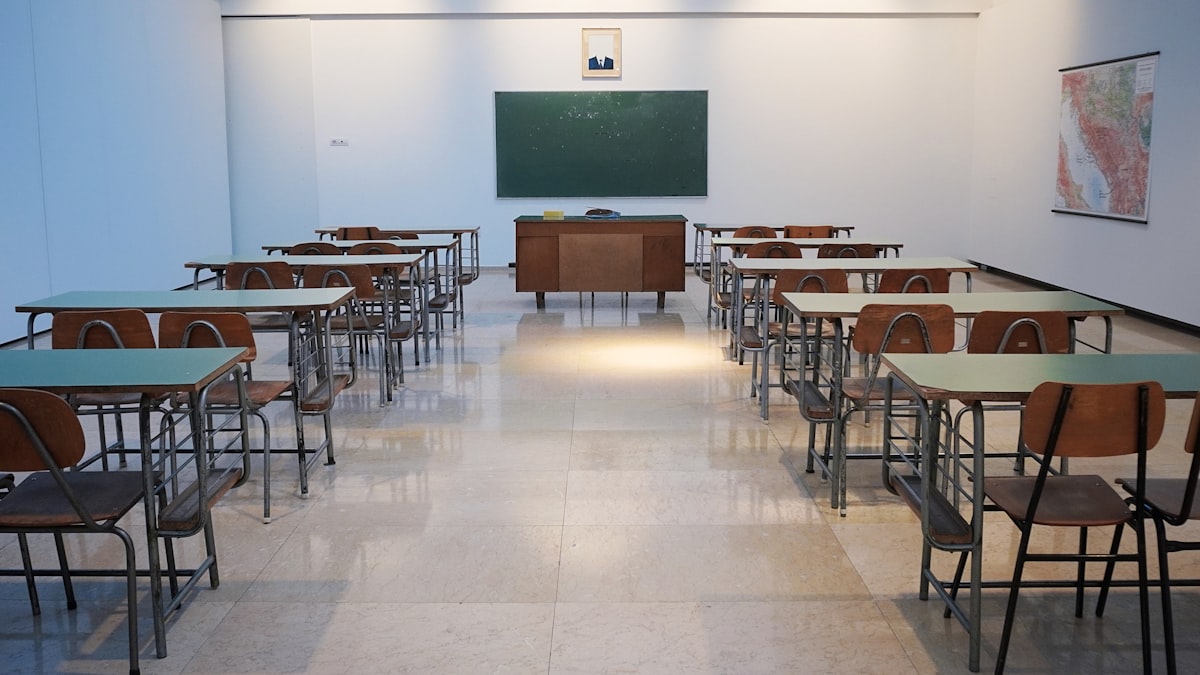
A wave is building. Across the United States and around the world, lawmakers and school leaders are doing something that would have seemed unlikely a decade ago: banning cell phones from classrooms, hallways, and in some cases, entire school buildings.
If you are a teacher, you have probably already felt this shift. Maybe your district sent an email about a new policy. Maybe your state legislature passed a law. Maybe you are still waiting, watching, and wondering what is coming.
Here is what you need to know about where things stand, what the research says, and what none of these policies can do on their own.
The Wave in the United States
California’s Phone-Free School Act requires every school district in the state to adopt a policy restricting student smartphone use during the school day by July 1, 2026. The law does not mandate a single approach. Districts can choose full bans, phone storage systems, classroom level restrictions, or other models. But every district must have a formal policy in place.
California is not alone. Florida passed legislation in 2023 requiring schools to block social media on school Wi-Fi networks and ban phone use during instructional time. Indiana followed with its own law requiring school districts to adopt phone restriction policies. Louisiana passed similar legislation mandating that schools develop and implement cell phone policies with real enforcement mechanisms.
The momentum is bipartisan and accelerating. More than a dozen states have either passed phone restriction laws or introduced legislation as of early 2026. The details vary, but the direction is consistent: phones are being pushed out of instructional spaces, and in many cases, out of students’ hands entirely during the school day.
The International Context
The United States is not leading this movement. It is catching up.
France banned cell phones in schools for students up to age 15 back in 2018, making it one of the earliest countries to act at the national level. The policy prohibits phone use during the entire school day, including breaks, unless a specific educational purpose is approved by the school.
Australia has implemented state level bans across multiple jurisdictions. Victoria, New South Wales, and other states have rolled out policies requiring students to store phones in lockers or designated areas from the first bell to the last. Early data from Australian schools has shown measurable improvements in student engagement and reductions in cyberbullying incidents during school hours.
The United Kingdom issued formal government guidance in 2024 directing schools to prohibit phone use throughout the school day, including at break times. The guidance stopped short of a national law but gave headteachers clear backing to implement and enforce phone free policies.
The Netherlands announced a classroom phone ban effective January 2024, developed in collaboration with schools and telecom companies. Italy has restricted phone use in classrooms, building on policies that have been in place in various forms for years.
The global pattern is unmistakable. Nations with very different education systems, cultures, and political contexts are arriving at the same conclusion: unrestricted phone access during the school day is not working.
What the Research Says
The case for phone restrictions draws on a growing body of evidence.
A widely cited study from the London School of Economics found that schools which banned phones saw meaningful improvements in test scores, with the largest gains among the lowest performing students. The researchers estimated that removing phones was equivalent to adding roughly five days of instructional time per year.
UNESCO’s 2023 Global Education Monitoring Report called for restricting smartphone use in schools, citing evidence that mere proximity to a phone, even when it is turned off, reduces cognitive capacity. The report emphasized that the presence of a phone creates a continuous attentional cost, pulling mental resources toward the device even when the student is not actively using it.
Research on adolescent mental health has added urgency. Studies have linked heavy smartphone and social media use to increased rates of anxiety, depression, and sleep disruption among teenagers. While the causal relationships are still debated among researchers, the correlational evidence is strong enough that both the U.S. Surgeon General and the American Psychological Association have issued formal advisories about social media’s effects on youth mental health.
But the research is not entirely one sided.
Some studies suggest that phone bans are difficult to enforce consistently and that heavy handed policies can damage student trust and teacher morale. Students with certain disabilities may rely on phone based accommodations. Parents in some communities want the ability to reach their children during the school day, especially in the context of school safety concerns. And there is a legitimate question about whether removing phones from schools without teaching students how to manage them simply delays the problem.
The evidence supports restrictions. It also suggests that restrictions alone are not sufficient.
The TechEQ Perspective: Policy Without Skill Building Is Incomplete
Here is the question that phone ban legislation does not answer: what happens when the school day ends and the phone goes back in the student’s hand?
Bans address the symptom. The symptom is distraction, fractured attention, social media conflicts bleeding into hallways and classrooms. These are real problems and removing the device from the environment reduces them. That is clear.
But the cause runs deeper. The cause is a nervous system that has been conditioned by variable reward schedules, social validation metrics, and infinite scroll to exist in a state of perpetual activation. The cause is a developing brain interacting with technology designed by teams of behavioral engineers to maximize engagement at the expense of well-being. The cause is that no one has taught this generation, or the adults around them, how their bodies and minds respond to algorithm driven environments.
A phone ban is like removing the allergen from the room. It helps. But it does not build the immune system.
TechEQ provides the framework for that deeper work. When students understand what notifications do to their nervous system, when they can name the anticipatory tension that makes them reach for their phone, when they recognize that the urge to check is a design feature and not a personal failing, they develop internal capacities that no policy can create.
Schools need both. Policy creates the conditions for learning by reducing environmental interference. Skill building creates the capacities students will need for the rest of their lives, long after school policies no longer apply to them.
What Different Policies Look Like in Practice
Not all phone bans are the same. Here is what the most common approaches look like on the ground.
Full building bans. Students turn in phones at the start of the school day and retrieve them at dismissal. Some schools use phone lockers or cubbies in the main office. This approach eliminates phone access entirely during school hours and removes the enforcement burden from individual teachers. It also raises logistical questions about storage, liability, and parent communication during emergencies.
Pouch systems. Companies like Yondr manufacture lockable neoprene pouches. Students place their phone inside at the start of the day and the pouch is magnetically sealed. Students carry the pouch with them but cannot access the phone until it is unlocked at a designated station at the end of the day. This model has gained traction in both schools and performance venues. It allows students to keep possession of their device while removing the temptation to use it.
Classroom level policies. Teachers set and enforce their own phone expectations. This is the most flexible approach but also the most inconsistent. One teacher may allow phones for research. Another may require them in a bin at the door. Students navigate different expectations period by period, and enforcement depends entirely on individual teacher capacity and willingness.
Phone free zones with permitted areas. Some schools restrict phones in classrooms and hallways but allow them during lunch or before and after school. This model acknowledges that students may need phone access at certain points while protecting instructional time.
Tech breaks. A structured approach where students have designated times during the day to check their phones, similar to how some workplaces manage email. The rest of the day is phone free. This model attempts to reduce the constant anticipatory tension by giving students a predictable window.
Each model has trade-offs. The strongest approaches combine clear, consistent policy with explicit instruction about why the policy exists, not as a punishment, but as a recognition that the learning environment requires protection from engineered distraction.
What You Can Do Regardless of School Policy
You may be in a school with a clear, enforced phone ban. You may be in a school where the policy is vague and enforcement is left to you. Either way, there are things you can do right now.
Name the design. Spend ten minutes helping your students understand why phones are hard to put down. Variable reward schedules, infinite scroll, social validation metrics. When students understand the engineering behind the pull, they stop blaming themselves and start thinking critically.
Teach the nervous system connection. Help students notice what happens in their bodies when a phone buzzes. The spike of anticipation. The difficulty returning to focus. This is not abstract neuroscience. It is felt experience that every student recognizes immediately when you name it.
Create transition rituals. The first two minutes of class after students put away phones are neurologically significant. Their nervous systems are transitioning from a high stimulation state to one that supports learning. Use breathing exercises, brief writing prompts, or a moment of silence. Give the brain a bridge between environments.
Reframe the conversation. Move from “you are in trouble for having your phone out” to “let us talk about what just happened with your attention.” The first creates conflict. The second creates learning.
Build the case with students, not against them. The most effective phone policies are the ones students understand and buy into. Ask your students what they notice about their own phone use. Let them design classroom agreements. When students participate in setting the boundaries, compliance becomes less about obedience and more about shared commitment.
The Bigger Picture
Phone bans are a necessary intervention. They are also, by themselves, an incomplete one.
The generation sitting in your classroom right now will spend the rest of their lives navigating devices, platforms, and algorithms designed to capture their attention and shape their behavior. School is one of the few remaining environments where adults can create protected space for developing minds. Using that space wisely means both limiting harmful exposure and building the skills that make students resilient to it.
Policy draws the line. TechEQ builds the capacity to understand why the line matters and what to do when no one is drawing it for you.
The phone will go back in their pocket at 3 p.m. The question is whether they pick it up with awareness or on autopilot. That is the work that outlasts any ban.
Try This Free Tool
RazaEd offers free AI-powered literacy tools for K-12 teachers, including differentiated reading passages, comprehension questions, and vocabulary activities for any grade level.
Related Reading
- TechEQ and the Nervous System
- Teaching TechEQ
- Your Students Are Not Addicted to Their Phones
- The Feeling Before the Check
EdTechInstitute explores how technology shapes teaching, learning, and what it means to grow up in a digital world.
Leave a Reply